
Post 1: Why Measuring Agile Maturity Matters
This is part of a 4-part series on measuring agile team maturity: Part 2 | Part 3 | Part 4
If you've ever worked on an Agile team, you've probably seen first-hand that not all teams operate at the same level of effectiveness, autonomy, or clarity. Some need hands-on guidance just to run a daily stand-up; others seem to run themselves like a well-oiled machine. But how can we assess where a team is on its journey—and more importantly, how do we tailor support to help them grow?
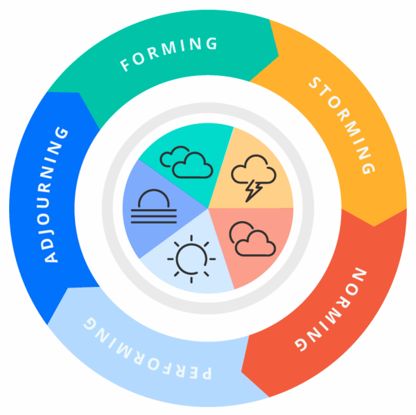
This post introduces the concept of Agile maturity—not as a replacement for foundational models like Bruce Tuckman's "Forming, Storming, Norming, Performing," but as a complementary tool for Agile organizations. While Tuckman's model explains team development stages, Agile maturity provides a framework to structure the right kind of support, especially for teams at the tail end of Norming or in Performing. Where Tuckman's model focuses on interpersonal dynamics and group cohesion, Agile maturity zooms in on operational independence, process ownership, and continuous improvement habits.
The Case for Measuring Agile Maturity
Agile practices are built on principles of self-organization, continuous improvement, and iterative delivery. But those qualities don’t appear overnight. Many teams struggle to live out Agile principles despite attending ceremonies and using Agile tools. Some may appear to be functioning smoothly on the surface—holding regular stand-ups, sprint reviews, and retrospectives—but underneath, they still depend heavily on their Agile coach or Scrum Master to move work forward.
That’s where an Agile maturity model comes in. It gives coaches, Scrum Masters, and engineering managers a way to:
- Understand where a team currently stands
- Identify the right level of support
- Set clear expectations for growth
- Measure improvement over time
- Facilitate consistent communication across leadership and support roles
Rather than relying purely on gut instinct or anecdotal experience, this model introduces objectivity and consistency to team development. It also helps avoid the trap of assuming that a team’s maturity can be inferred from output metrics alone.
Maturity ≠ Velocity
One common misconception is that mature teams are the ones delivering the fastest or finishing the most story points. But Agile maturity is not about speed. It’s about:
- Who drives decision-making?
- How well does the team self-organize?
- Can they resolve blockers without external help?
- Are they continuously improving on their own?
- Do they reflect and adjust without being prompted?
A team may be fast but still heavily reliant on a coach. Conversely, a slower team might be independently driving long-term improvements and building sustainable practices.
Measuring Agile maturity allows teams and stakeholders to distinguish between productive independence and performance that’s coach-dependent.
The Role of the Agile Coach
As teams mature, the coach’s role changes:
- At early stages, the coach facilitates Agile events, drives retrospectives, and acts as a mentor in decision-making.
- As teams grow, the coach becomes more of a consultant—offering guidance when asked but no longer embedded in daily operations.
- At higher maturity, the coach steps back almost entirely, focusing instead on strategic support and occasional check-ins.
This shift doesn’t just benefit the team—it enables coaches to support more teams, scale their impact, and focus on systemic improvements across the organization.
Why Structure Matters
Without a structured way to assess maturity, teams can become over- or under-supported:
- Too much support for a mature team breeds dependency.
- Too little support for an early-stage team leads to confusion and stagnation.
- Inconsistent support creates frustration for both teams and coaches.
By measuring maturity, leaders can right-size the involvement of Agile coaches and facilitators, ensuring teams get what they need to keep growing. It also creates a shared language between team members, coaches, and management to discuss progress, identify needs, and justify resource allocation.
What’s Next
In the next post, we’ll break down the five stages of Agile maturity—from Fully Supported to Self-Organized—and describe what each stage looks like in practice.
We’ll explore the mindset, behaviours, and support structures that characterize each level—and how to help teams move from one to the next. Stay tuned to learn how to assess your team's current stage and what it takes to move toward greater independence.